
It seems we can’t find what you’re looking for. Perhaps searching can help.
Guilin Food Guide: What & Where to Eat
Guilin food deserves its own chapter in any trip. The city’s calling card is guilin rice noodles — a cheap, comforting bowl of slippery rice noodles in a rich broth with braised meat, pickled beans, and peanuts — but there’s plenty more to eat once you look past the famous bowl. I’ve eaten my way through Guilin on several visits, so below I’ve gathered the dishes and food streets worth planning around. This is what to eat in Guilin, and where to find it.
Guilin, China, doesn’t advertise its food the way Chengdu does — but it should. If you’re eating your way around the country, I’ve also written a broader roundup of things to eat in China. Here, we focus on one city.
🍜 Guilin Food: What to Eat First
Guilin’s flavors run sour, savory, and gently hot, and the soul of all of it is a single ladle of lǔshuǐ (master gravy). Don’t overthink it — here’s what to eat in Guilin, grouped so you can order straight off it. A heads-up: the best food in Guilin is usually the cheapest.
⏱️ At a glance
· Guilin rice noodles: 5–6 CNY a bowl (USD 0.7–0.9)
· Beer fish: 68 CNY/jin carp, or 60–90 CNY/person jiangu (USD 8.5–13)
· Lipu taro pork: 30–50 CNY/person (USD 4.3–7)
· Stuffed snails, bamboo rice, oil tea: snack-size, mostly under 30 CNY
· Guilin rice noodles: 5–6 CNY a bowl (USD 0.7–0.9)
· Beer fish: 68 CNY/jin carp, or 60–90 CNY/person jiangu (USD 8.5–13)
· Lipu taro pork: 30–50 CNY/person (USD 4.3–7)
· Stuffed snails, bamboo rice, oil tea: snack-size, mostly under 30 CNY
The signature bowl — Guilin Rice Noodles (桂林米粉, mifen)
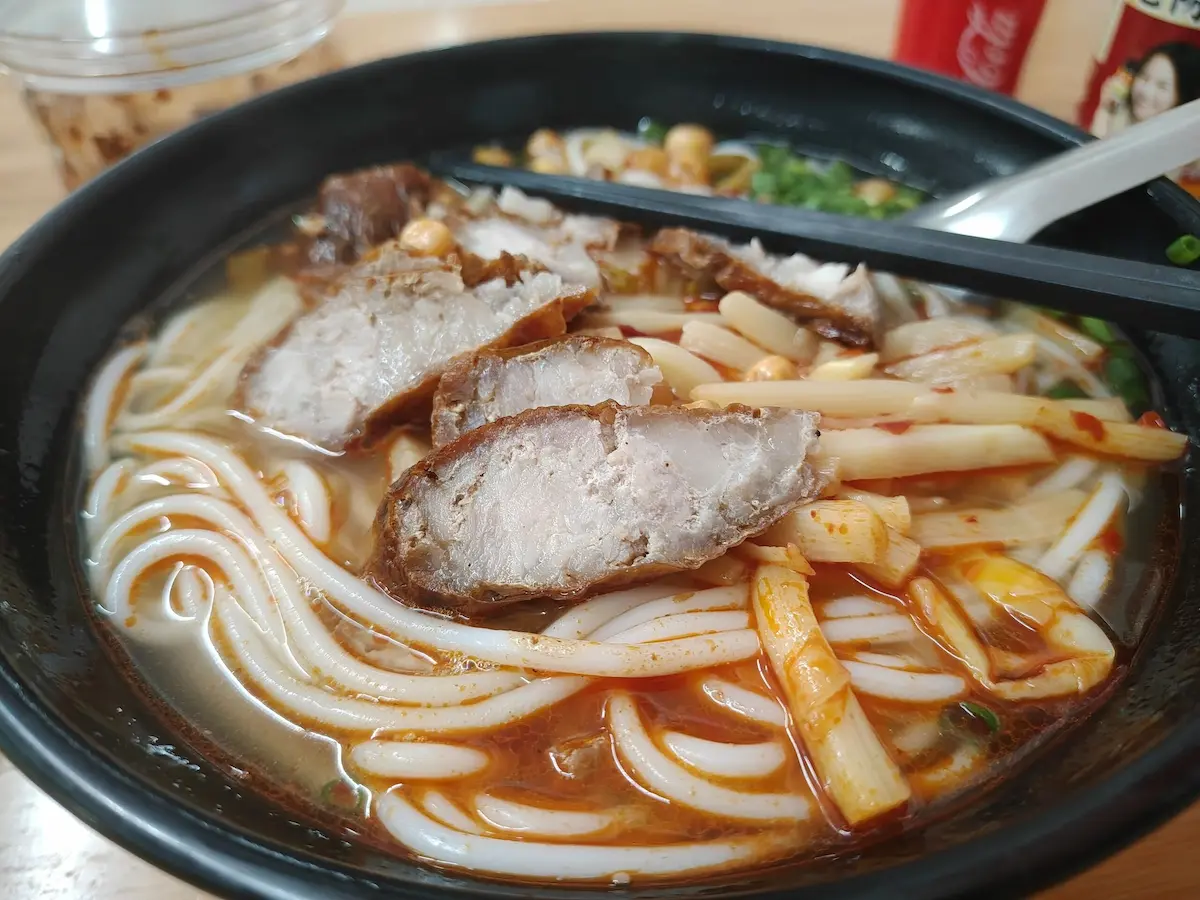
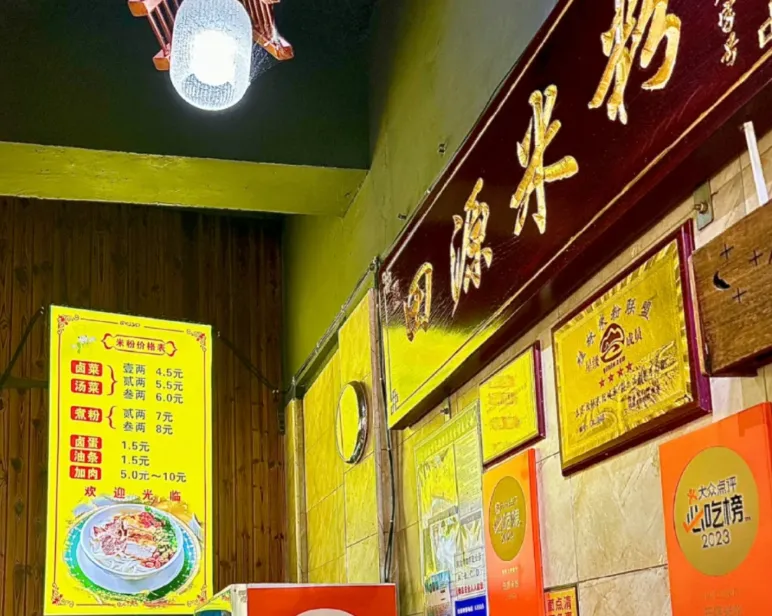
This is the city’s national breakfast and its flavor calling card. Round, springy rice noodles get a ladle of dark gravy, a layer of braised beef and crispy pork, a scatter of peanuts, plus a self-serve bar of pickled bamboo shoots, pickled beans, and scallions. Visitors often just call them Guilin noodles, but this is Guilin’s famous food — everything else on this list comes second.
Guilin has thousands of rice noodle shops, which together churn through hundreds of tons of fresh noodles every single morning. What makes traditional Guilin noodles special isn’t the noodle itself — it’s the gravy, and every Guilin rice noodle shop in town guards its own recipe. Add in the pre-packaged instant Guilin mifen sold across the country, and the whole category clears 10 billion CNY a year. This isn’t a niche dish — it’s the city’s pulse.
📌 The one rule: eat Guilin rice noodles dry first, then add broth. A small bowl (二两, about 100 g) runs 5–6 CNY (USD 0.7–0.9); add crispy pork or extra beef and it’s 8–12 CNY (USD 1.1–1.7).
River fish & banquet dishes — Beer Fish, Lipu Taro Pork
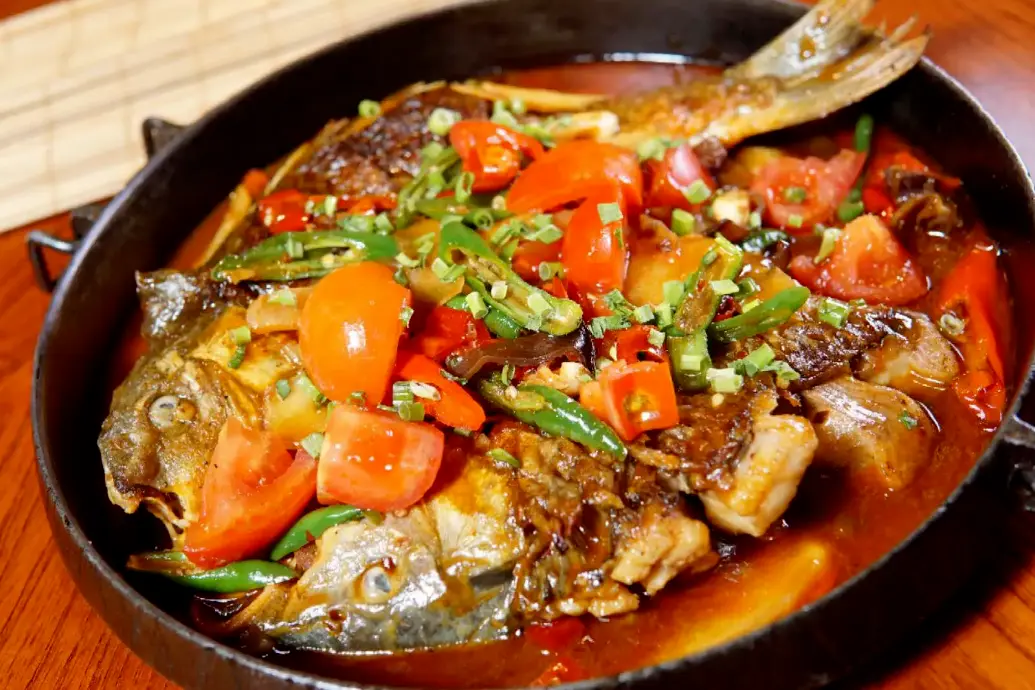
Beer fish (啤酒鱼) is Yangshuo’s headline act. A whole Li River fish, cooked scales-on, gets seared in tea-seed oil until the skin curls crisp, then braised in local beer with tomato and green pepper. The meat turns tender and malty, with zero muddy taste.
Prices run by fish type and weight. Common carp is about 68 CNY a jin (USD 10); the local favorite, jiangu fish, lands around 60–90 CNY per person (USD 8.5–13); yellow catfish or wild big fish can top 168 CNY a jin (USD 24+). Ask the price and the species before you order — more on that below.
Lipu taro pork (荔浦芋扣肉) is the banquet dish. Layers of powdery-sweet Lipu taro and pork belly are steamed until they melt into each other, the pork taking on taro fragrance and the taro soaking up the fat. Split between a few people, it runs 30–50 CNY a head (USD 4.3–7).
Snacks & minority flavors — Stuffed Snails, Bamboo Rice, Oil Tea
Stuffed Li River snails (田螺酿): the snail meat comes out, gets minced with pork and perilla, and goes back into the shell to braise. Slurp one and you get springy meat and a burst of broth.
Bamboo rice (竹筒饭), a Longji terrace specialty: glutinous rice packed into a fresh-cut bamboo tube and roasted, so it picks up a smoky, charcoal scent.
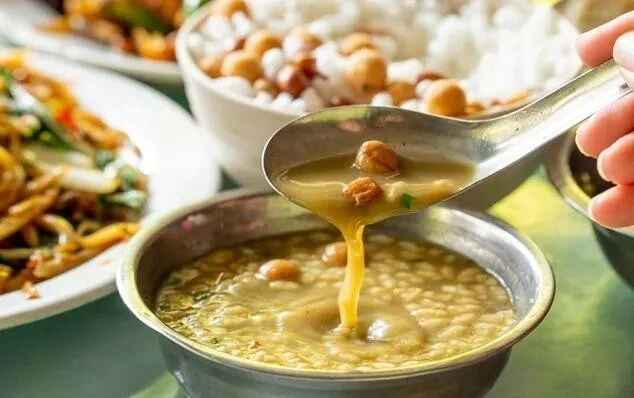
Oil tea (油茶), from Gongcheng: tea leaves, ginger, and garlic pounded and boiled into a brew that’s bitter and salty on the first sip, then turns sweet three seconds later. It’s an acquired taste — and worth acquiring.
Street & adventurous — night market skewers, Guibei heavy hitters
If you want heat, Guilin has it: night-market skewers (locals swear by Jinni Shisan Yi, at 2–4 CNY a skewer, around 20 CNY per person / USD 2.9), the sour-spicy Quanzhou vinegar-blood duck, red-oil rice noodles, and niubabao (beef offal hotpot). Sensitive stomach? Start with the rice noodles and the mild stuff.
📍 Where to Eat in Guilin
Figuring out where to eat in Guilin comes down to one rule: follow the locals off the main street.
For rice noodles, go to the back-street shops, not the scenic-area chains. Lao Dongjiang (main branch, Longyin Road, Qixing, 06:00–14:00, sells out) makes a famously deep gravy; the signature is braised-meat rice noodles with crispy pork and beef, so don’t leave it to the afternoon. Youyixuan (Jiefang Road, Xiufeng, 06:30–21:30) is another old-timer — order the classic braised-meat noodles with a slice of water-chestnut cake.
For beer fish, go into Yangshuo West Street’s alleys, not the riverfront frontages. Places like Xie Sanjie have done it for years — jiangu beer fish with stuffed snails is the move — and they run from lunch deep into the night (from about 10:30, many stay open past 11). One rule: the closer to the Li River view, the puffier the price. Walk five minutes into the lanes and the same fish, or better, costs noticeably less.
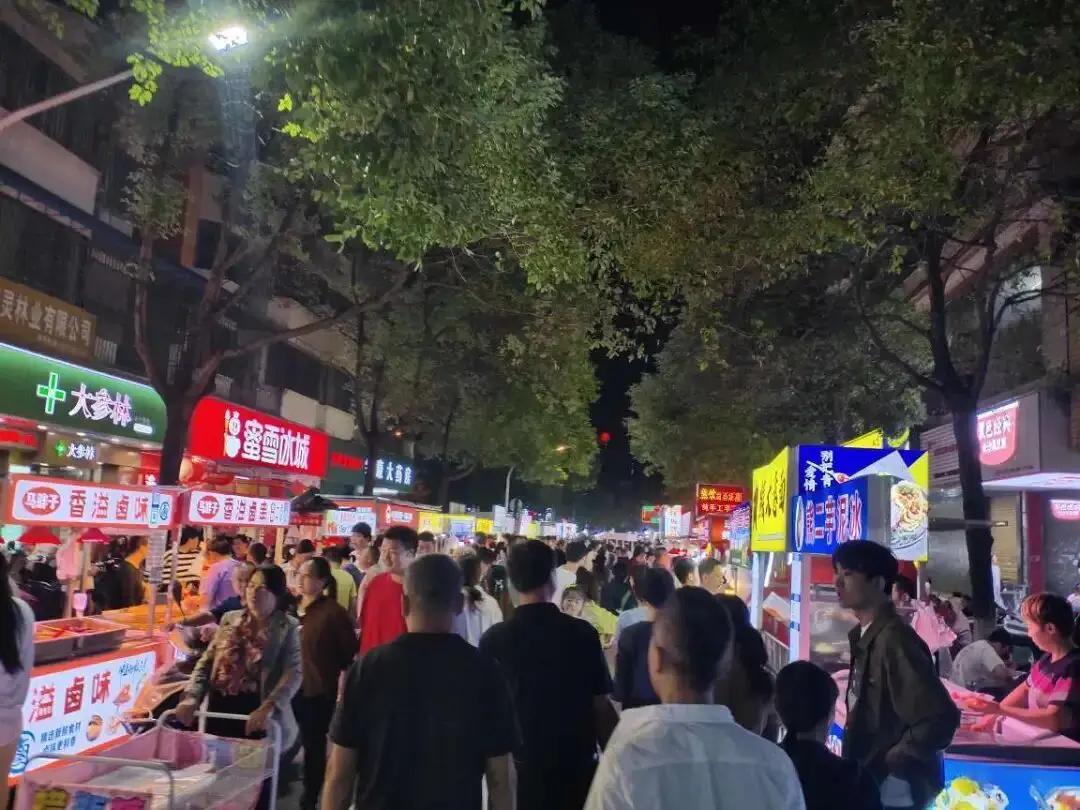
For Guilin street food, head for Dongxi Lane and Zhengyang Pedestrian Street after dark. They sit side by side, a 5–10 minute walk from Two Rivers and Four Lakes and Elephant Trunk Hill — Dongxi Lane is the classic Guilin food street, with skewers, sweet soups, suanye (pickled fruit), and nuomifan (sticky rice) lined up in a row. A 3-CNY sweet soup and a 6-CNY sticky rice (USD 0.4–0.9) is Guilin at its most honest.
A Day of Eating in Guilin
The first time I picked up a bowl of Guilin rice noodles, I almost poured in the soup right away. I learned better. Mix the thick, smooth noodles with that dark gravy first — it’s simmered from fermented soybeans and dozens of spices, dense enough to cling to every strand. The noodles are springy and firm, wrapped in a coat of umami. Then a chopstick of guoshao, crispy fried pork belly that shatters between your teeth, and a handful of pickled bamboo shoots and beans to slice through the richness. When half the bowl is gone, ladle in the hot bone broth. That’s the whole point of it.
Come the main meal, there’s a beer fish on the table. It arrives a bright red pot, a whole river fish swimming in a tomato-and-beer reduction, still bubbling. Eat the skin first — the scales have fried into a crisp shell slick with sauce — then the flesh, which gives way with the lightest press and tastes of malt and a slow heat. White rice mops up the rest.
The night ends with Gongcheng oil tea. It’s the kind of drink that warns you off on the first sip: bitter, salty, smoky from the pounded tea, ginger, and garlic. Most first-timers wince. Wait three seconds, though, and a sweetness climbs up the back of your throat. It warms. Then it hooks you. With puffed rice, peanuts, and scallions, a pot of this out-caffeinates coffee.
⚠️ 5 Guilin Food Mistakes to Avoid
⚠️ These five slip-ups turn a great food city into a mediocre one. Steer clear and you’ll eat like a local.
- Mistake one: pouring soup into your rice noodles first. The soul of the bowl is the gravy. Soup first washes it away, and you end up with ordinary soup noodles. Eat it dry, then add broth at the bottom of the bowl.
- Mistake two: ordering beer fish without asking the price. It’s priced by the jin, and the species gap is huge — common carp at 68 CNY, yellow catfish or wild fish at 168+ CNY a jin (USD 24+). Confirm the fish, the unit, and the total before it hits the pan.
- Mistake three: trusting the “authentic” signs near the scenic spots. In Yangshuo West Street’s core and the riverfront, the same bowl of rice noodles or stir-fry is marked up hard — some vendors have been caught charging tourists 13 CNY a bowl, or absurd prices for beer fish. Five minutes into the lanes, that bowl is still 5–6 CNY, and better.
- Mistake four: drinking oil tea expecting boba. It’s salty and bitter, not sweet. That first bitter, smoky hit is normal. Sip slowly and the sweetness comes; rush it and you’ll miss the point.
- Mistake five: treating every night-market skewer as safe. Stall hygiene varies, and skewers and cold dishes are the riskiest. If your stomach is sensitive, ease in with rice noodles and cooked dishes, and give the stall a quick look first.
💡 Not sure how to order or handle the chopsticks-and-round-table customs? I break down the basics in my Chinese dining etiquette guide.
Where to Go After You Eat
Eating here plays nicely with sightseeing. Dongxi Lane and Zhengyang Pedestrian Street sit right next to Two Rivers and Four Lakes and Elephant Trunk Hill — watch the hill and the Sun and Moon Pagodas at dusk, then walk minutes into the night market for dinner and late snacks. Over in Yangshuo, ride the Ten-Mile Gallery or raft the Yulong River by day, then head back to West Street in the evening for beer fish and the riverside stalls.
For the full list of sights and how to string them into a route, see my Guilin travel guide, my things to do in Guilin roundup, and my Guilin itinerary. For a bed near the food, check where to stay in Guilin.
❓ Guilin Food FAQ
What food is Guilin famous for?
Guilin rice noodles. It’s the city’s flavor signature, eaten for breakfast, lunch, and late night, at 5–6 CNY a bowl (USD 0.7–0.9).
How do you eat Guilin rice noodles?
Dry first: toss the noodles with the gravy and eat, then add a ladle of bone broth at the end. Don’t pour soup in at the start. (A full how-to and history guide is coming — this page just gives you the gist.)
Is Guilin food spicy?
Mostly sour, savory, and mildly spicy, and you control the heat. Rice-noodle chili is self-serve; beer fish and vinegar-blood duck run hotter, so say “less spicy” (少辣) when ordering. Oil tea is bitter-salty and vinegar-blood duck is sour — a different kind of “strong” from chili.
Are these rice noodles the same as pho?
No. They’re round and usually eaten dry-tossed first, then finished with broth; pho is a soup. There’s a case that these noodles influenced pho, so think of them as distant cousins.