Things to Eat in China: A City-by-City Food Tour (Beijing to Chengdu)
6:30 a.m. A back alley off Shanghai’s Nanjing Road. I’d been standing in line for fifteen minutes behind a man in pajamas and a woman shouting into a WeChat voice message.
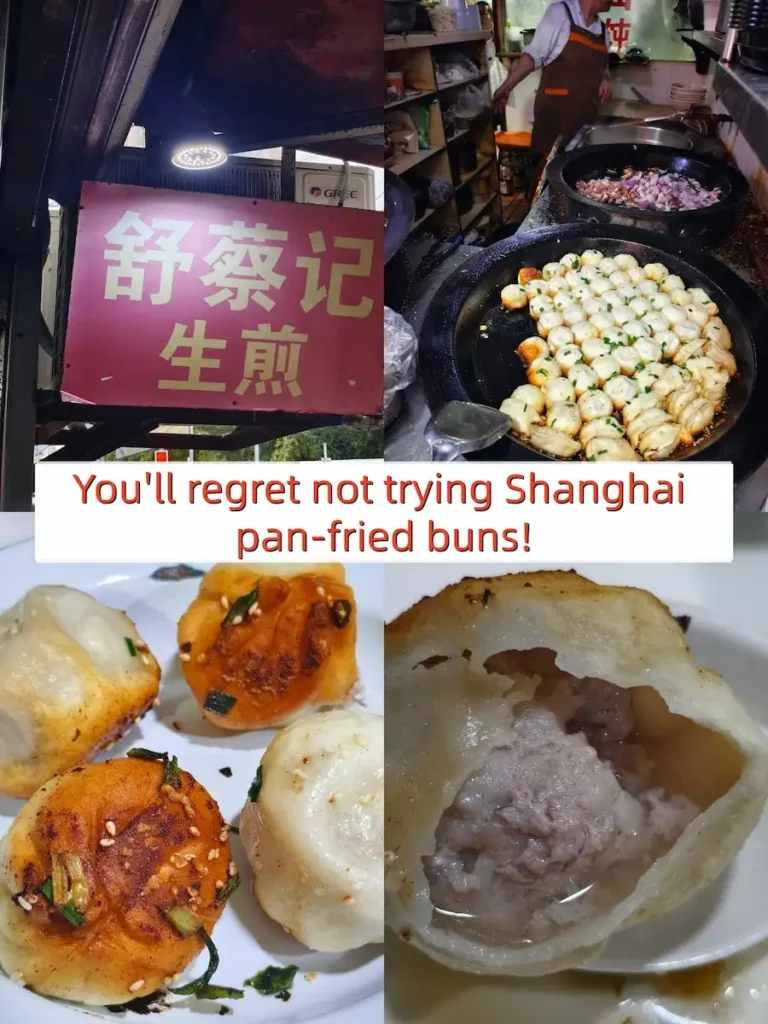
The cook lifted the wooden lid. Steam exploded upward, carrying the smell of pork fat and toasted sesame. Eight shengjianbao sat sizzling in a cast-iron pan the size of a manhole cover — golden-crisp on the bottom, crowned with scallions and black sesame. I bit into one. Broth shot across my shirt.
The man in pajamas glanced at me. His face said: first-timer.
I didn’t care. That hot, savory-sweet burst of pork broth on my tongue made me understand, instantly, why Shanghainese people queue twenty minutes for breakfast. Here’s what three years of eating my way across China taught me: the best things to eat in China aren’t in five-star hotels or on delivery apps. They’re at 5 a.m. breakfast stalls, in copper hot pots that have been boiling for forty years, and beside smoky charcoal grills in Muslim Quarter night markets.
Wondering what to eat in China when you’ve got limited time and zero Mandarin? This guide compresses the answer into five cities, twenty-five dishes, and a pile of hard-won lessons from my own stomach. If you’re mapping out what to eat in China before your trip — and don’t want to spend hours cross-referencing Reddit threads — you’re in the right place.
- Things to Eat in China: A 5-City Cheat Sheet
- Beijing: Beyond Peking Duck — What Locals Actually Eat Every Day
- Xi'an: The Carb Capital — Roujiamo, Biangbiang, and a Noodle You Can't Type
- Chengdu & Chongqing: Two Cities, One Fiery Obsession
- Shanghai: Soup Dumplings and the Art of Not Burning Yourself
- Guangzhou: Dim Sum, Claypot Rice, and a City That Lives to Eat
- China Street Food: The Ultimate Cross-Country Guide
- 6 Mistakes Foreigners Make Eating in China (Don't Be That Person)
- Quick Answers: Eating in China FAQ
Things to Eat in China: A 5-City Cheat Sheet
If you’ve got thirty seconds, this table is your answer to what to eat in China. These are the must-eat dishes, the ones locals actually order — not the watered-down versions you’ll find in tourist menus. Every dish listed here has been tested in the field, most of them multiple times, some of them weekly.
| City | Dish | Chinese Name | Where to Go (Top Pick) | One-Liner |
|---|---|---|---|---|
| Beijing | Peking Duck | 北京烤鸭 | Siji Minfu (Forbidden City branch) | Crispy skin you can hear, with a view of the imperial moat |
| Zhajiang Noodles | 炸酱面 | Haiwanju | Beijing’s answer to bolognese — but better | |
| Mongolian Hotpot | 铜锅涮肉 | Jubaoyuan (Niujie) | Hand-sliced lamb dipped in sesame paste. Winter perfection. | |
| Jianbing | 煎饼果子 | Any morning street stall | China’s savory crepe. The breakfast GOAT. | |
| Xi’an | Roujiamo | 肉夹馍 | Shengzhiwang (Muslim Quarter) | Braised pork in a crispy flatbread. The Chinese hamburger. |
| Biangbiang Noodles | Biangbiang面 | Zui Chang’an (Bell Tower) | Belt-wide noodles under a sizzling pour of chili oil | |
| Yangrou Paomo | 羊肉泡馍 | Muslim Quarter old establishments | Lamb stew with bread you crumble yourself | |
| Cold Skin Noodles | 麻酱凉皮 | Shengzhiwang | Sesame paste + chili oil + icy-smooth noodles. Summer savior. | |
| Chengdu | Sichuan Hotpot | 四川火锅 | Shujiuxiang (Baihua) | Split pot available. Adjustable spice. Beginner-friendly. |
| Mapo Tofu | 麻婆豆腐 | Chen Mapo Tofu (Qinghua Road) | The birthplace of the dish. One bowl, three bowls of rice. | |
| Dan Dan Noodles | 担担面 | Xiaomingtang | Crushed peanuts + minced pork + red chili oil. Stir and ascend. | |
| Chongqing | Chongqing Hotpot | 重庆火锅 | Zhoushixiong (Jiefangbei) | Pure beef tallow. Wilder and bolder than Chengdu’s version. |
| Wanza Noodles | 豌杂面 | Huashi Wanwan Mian | Yellow peas + minced pork sauce + chili oil. ¥10 nirvana. | |
| Shanghai | Xiaolongbao | 小笼包 | Nanxiang Steamed Bun | Bite. Sip the broth. Eat. Never whole. (You’ve been warned.) |
| Shengjianbao | 生煎包 | Dahuchun / old alley stalls | Crispy-bottomed, broth-filled. The soul of Shanghai breakfast. | |
| Braised Pork Belly | 红烧肉 | Laojishi | Meltingly tender. Dark soy, rock sugar, Shaoxing wine. Shanghainese comfort. | |
| Guangzhou | Dim Sum | 广式点心 | Dian Dou De (Huifu East Road) | Tablet ordering with photos. Har gow, siu mai, chicken feet. Go wild. |
| Char Siu | 蜜汁叉烧 | Any roast meat specialist | Sweet-savory-caramelized. The charred edges are the prize. | |
| Wonton Noodles | 云吞面 | Baohua Noodle | Shrimp wontons + bamboo-thin noodles + dried flounder broth | |
| Claypot Rice | 煲仔饭 | Chaoji (Beijing Road) | The scorched rice crust at the bottom is the whole point. |
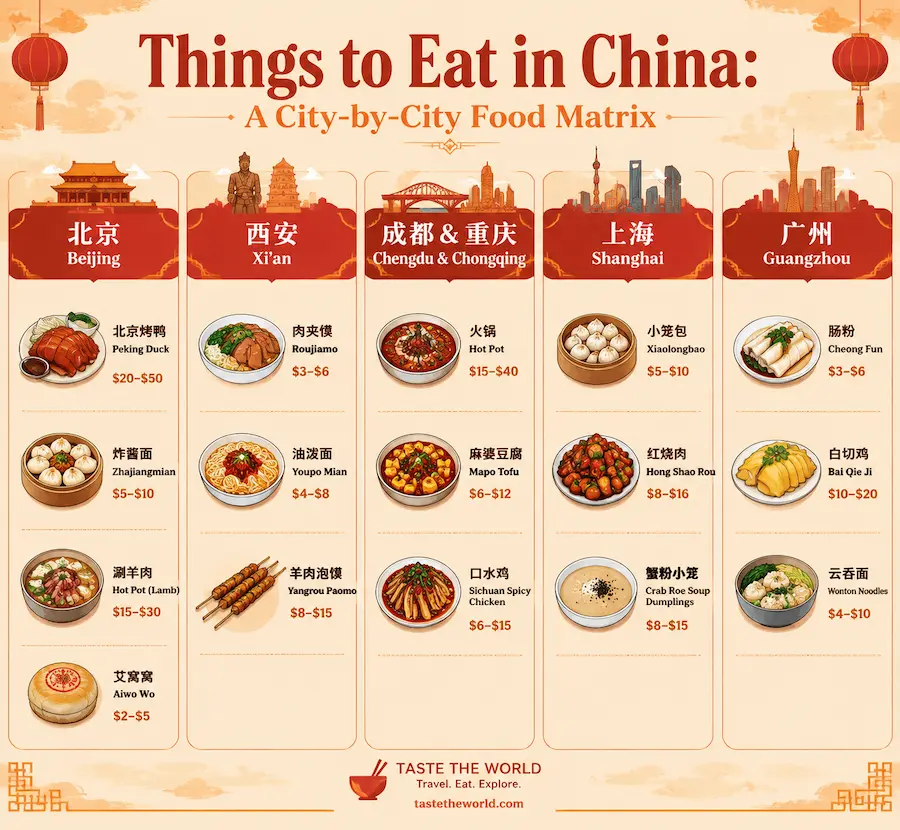
That’s your map. Below, we go city by city — what to order, where to find it, and how to avoid looking like a confused tourist while doing it. Think of this as your personal china food tour planning tool: follow the cities in order and you’ll eat your way from imperial duck to Cantonese claypot rice without a single wasted meal.
Beijing: Beyond Peking Duck — What Locals Actually Eat Every Day
Yes, get the duck. But skip Quanjude — it’s riding on reputation and charging accordingly. Go to Siji Minfu (Donghuamen branch, near the Forbidden City). Grab a window seat on the second floor. A chef wheels a trolley to your table and carves a mahogany-glazed duck into paper-thin slices before your eyes. Dip the crackling skin in sugar — it dissolves on contact. Wrap the meat in a lotus-leaf pancake with sweet bean sauce, scallions, and cucumber. One bite: crisp, soft, sweet, savory, all at once. About ¥180–220 per person (roughly USD 26–31).
But Beijingers don’t eat duck every day.
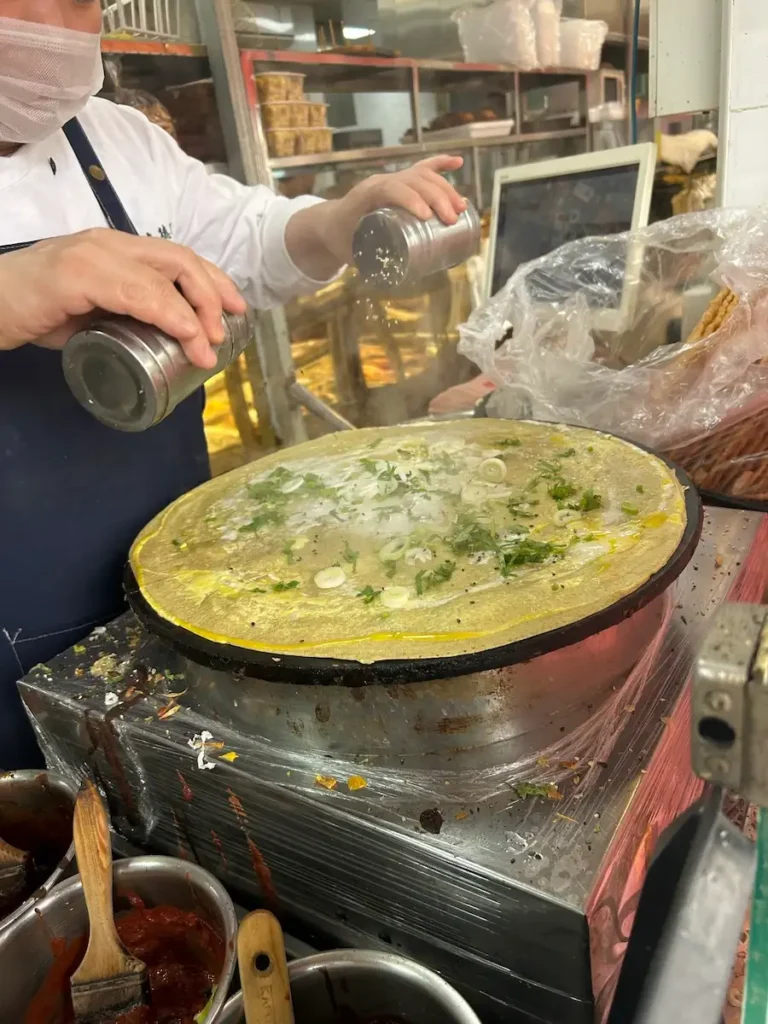
At 7 a.m., find a jianbing stall in any hutong alley. The vendor ladles mung bean batter onto a hot griddle, cracks an egg, scatters scallions and black sesame, flips, brushes on sweet bean paste and chili sauce, and folds a sheet of crispy cracker into the center. Two minutes. ¥8 (USD 1.10). Handed to you in a plastic bag. This is what Beijing eats for breakfast.
For lunch: zhajiangmian. Hand-pulled noodles, rinsed in cold water, topped with julienned cucumber, radish, soybean sprouts, and a scoop of glossy pork-and-fermented-soybean sauce — the zhajiang. Mix it yourself. Every strand coated in that salty, deeply savory, slightly sweet paste. ¥25–35 (USD 3.50–5).
Winter in Beijing means copper hotpot (铜锅涮肉). Jubaoyuan on Niujie Street always has a line. A charcoal-heated copper pot sits between you, filled with nothing but water, scallions, ginger, and goji berries — no chili, no oil. Dip paper-thin hand-sliced lamb into the boiling broth. Three seconds. Swirl it through sesame paste you’ve customized with chive flower sauce, fermented tofu, and chili oil. The lamb melts. ¥120–150 per person (USD 17–21).
⚠️ If you’re feeling brave: Yinsan Douzhi near the Temple of Heaven sells douzhi — a fermented mung bean drink that smells, let’s say, challenging. Local grandmas love it. First-timers usually don’t. ¥3 (USD 0.40). Pair it with jiaoquan (fried dough rings) and pickled vegetables. You’ll at least get a story out of it. If you’re building a china food tours itinerary, Beijing sets the bar high — but Xi’an is where things get seriously carb-heavy.
Xi’an: The Carb Capital — Roujiamo, Biangbiang, and a Noodle You Can’t Type
The Muslim Quarter at night is Xi’an at its rawest. Smoke billowing from charcoal grills. Skewers of cumin-crusted lamb piled high. Giant cauldrons of mutton stew bubbling away. And that character — biáng — 58 strokes, untypeable on any keyboard, unforgettable after one bowl.
Start with roujiamo. At Shengzhiwang on Dapiyuan Street, braised pork belly has been simmering overnight with cinnamon, star anise, cloves, and cardamom. The meat collapses at the touch of a cleaver. The cook scoops it onto a wooden block, chops it fine, stuffs it into a just-baked baijimo flatbread — crisp shell, soft crumb — and hands it over. The juices soak into the bread. ¥15–20 (USD 2–3). You’ll want a second one. Get a second one.
Biangbiang noodles are the width of a belt, pulled and slapped against a counter until they stretch. Topped with garlic, chili flakes, and a scalding pour of hot oil that sizzles and crackles on impact. Zui Chang’an near the Bell Tower does a polished version alongside Shaanxi classics like crispy whole hulu ji (calabash chicken). ¥80–110 per person (USD 11–15). Polished, but still legit.
Yangrou paomo — lamb stew with crumbled bread — is Xi’an’s winter anchor. You get a bowl of rich lamb broth and two semi-leavened flatbreads. You crumble the bread. Pea-sized pieces. The smaller, the more authentic. Hand it back. The kitchen boils it with vermicelli, wood ear fungus, sliced lamb, and scallions. Comes back thick, fragrant, soul-warming. ¥30–45 (USD 4–6). Eat it with pickled garlic and chili paste on the side.
Summer in Xi’an? Skip the hot stew. Get liangpi — cold, slippery noodles drenched in sesame paste, garlic water, black vinegar, and chili oil. ¥15 (USD 2). Shengzhiwang does both roujiamo and liangpi. Order both. Thank me later.
Chengdu & Chongqing: Two Cities, One Fiery Obsession
Let’s get one thing straight: Chengdu hotpot and Chongqing hotpot are not the same thing.
Chongqing hotpot runs on pure beef tallow. The broth arrives as a solid crimson block that melts into a volcanic, churning red sea. Hundreds of dried chilies. A blanket of Sichuan peppercorns. The dipping sauce is aggressively minimalist: sesame oil + minced garlic. That’s it. No oyster sauce. No peanut paste. Chongqingers believe anything extra defiles the purity of the tallow. The culture is dockside, working-class, unapologetically intense — tripe, duck intestine, and aorta are standard orders.
Chengdu hotpot blends beef tallow with rapeseed oil. Lighter (relatively). More aromatics. The emphasis tilts from pure heat toward the málà — the numbing-spicy double punch of Sichuan peppercorn and chili. The dipping bar is a playground: sesame oil as your base, plus as much oyster sauce, crushed peanuts, cilantro, scallions, and zhe’ergen (a local herb) as you want. Chengdu’s dining culture is more relaxed, more leisurely — you linger, you chat, you don’t rush.
Where to go:
Chengdu — Shujiuxiang (Baihua branch) is the tourist-friendly pick. They do a yuanyang pot (half fiery, half mild) and the staff won’t judge you for ordering it. ¥130–160 per person (USD 18–22). For a taste of Chengdu’s street-level cooking, Mingting Xiaoguan is an upgraded version of the city’s legendary “fly restaurants” — try the brain flower tofu (don’t balk, it’s a local icon). ¥70–90 (USD 10–13). And Chen Mapo Tofu on Qinghua Road is hallowed ground — this is where the dish was born. One bowl of their mapo tofu, glistening in its chili-oil slick, will ruin all other versions for you. ¥60–80 (USD 8.50–11).
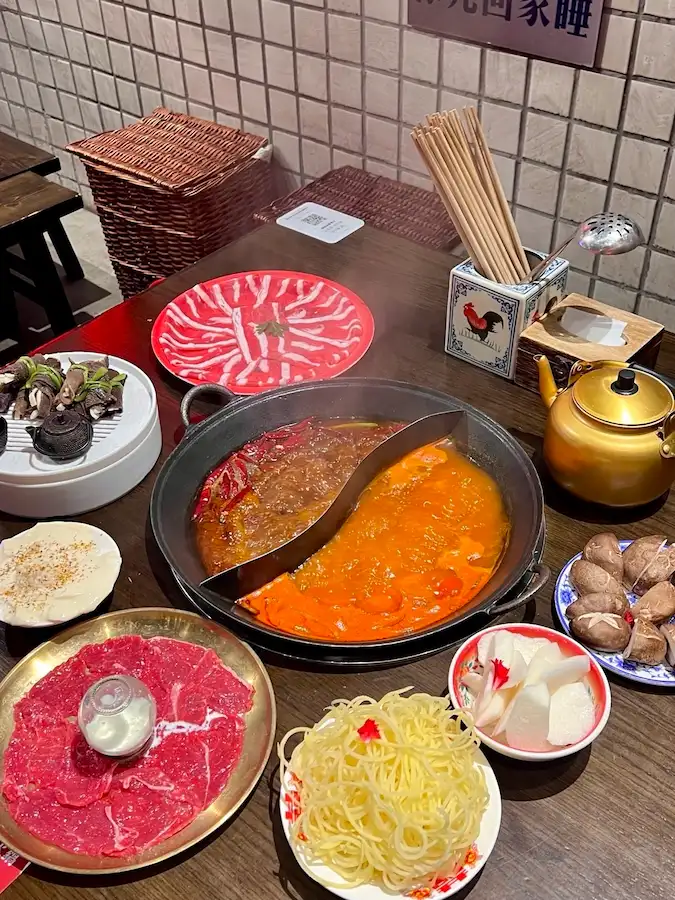
Chongqing — Zhoushixiong (Jiefangbei branch) is a reliable chain. Big, consistent, and the chefs slice meat in an open kitchen. ¥110–140 per person (USD 15–20). But if you want the real Chongqing — the one where you crouch on a tiny plastic stool on the sidewalk — find Huashi Wanwan Mian. A bowl of wanza mian costs ¥18 (USD 2.50): springy wheat noodles under a blanket of yellow peas cooked to a soft mash, minced pork sauce fried to a deep brown, and chili oil that stains everything red. The soundtrack is slurping and taxi horns. This is Chongqing.
⚠️ A word on spice levels: when a Sichuanese person says wēilà (“mildly spicy”), translate it in your head to “thermonuclear.” My second night in Chongqing, I confidently ordered wēilà. Ten minutes later, a boiling cauldron of blood-red tallow studded with hundreds of dried chilies sat before me. One dip of beef tripe sent my mouth into a state of exquisite, agonizing numbness. Three cans of herbal tea later, I survived. Among all the things to eat in China, Sichuan hotpot is the one that will test your limits — and the one you’ll be craving again before your plane lands back home. Always order the yuanyang pot your first time. Give yourself an escape route.
Shanghai: Soup Dumplings and the Art of Not Burning Yourself
Shanghai cuisine runs on nóng yóu chì jiàng — heavy oil, dark soy, red-braised. Rich, sweet-savory, unapologetically indulgent.
Xiaolongbao (soup dumplings) are the city’s edible business card. There is a technique: pinch the pleated top with your chopsticks, lift — the wrapper should be translucent, the broth visibly trembling inside — and place it gently on your soup spoon. Bite a tiny hole in the skin. Sip the broth first. Then dip the rest in ginger-infused black vinegar and eat it. If you pop the whole thing in your mouth, the near-boiling broth will scorch your entire palate, and you’ll spend the next three days regretting it. (I speak from experience.)
Nanxiang Steamed Bun Restaurant is the famous one. The queue is punishing. Honestly, plenty of old-school joints across Shanghai do xiaolongbao just as well — look for a line of local grandparents. That’s your universal quality indicator.
Shengjianbao are xiaolongbao’s rowdier sibling. Instead of steamed, they’re pan-fried in a massive cast-iron skillet — crispy-golden on the bottom, soft and steaming on top. The filling is packed with pork aspic that melts into scalding broth during cooking. Dahuchun is the heritage brand. Or just duck into any lane house alley at 7 a.m. and follow the crowd.
Braised pork belly (红烧肉, hóngshāoròu) is the anchor of Shanghainese home cooking. Pork belly cut into mahjong-tile cubes, slow-braised with dark soy, light soy, rock sugar, Shaoxing wine, star anise, and cinnamon. Two hours later, the fat has transformed into something you don’t chew — you press it against the roof of your mouth and it disappears. Laojishi does one of the city’s best. ¥150–200 per person (USD 21–28).
⚠️ Visiting in autumn (September–November)? Hairy crab season. Shanghainese observe the “nine female, ten male” rule: September for female crabs (rich with roe), October for males (packed with creamy milt). Steamed, dipped in black vinegar with shredded ginger, paired with warm Shaoxing wine. This is Shanghai at its most ritualistic. One thing I’ve learned chasing the best things to eat in China: every city has a dish that defines it. In Shanghai, it’s xiaolongbao. In Guangzhou — coming up next — it’s not just one dish. It’s an entire morning.
Guangzhou: Dim Sum, Claypot Rice, and a City That Lives to Eat
The Cantonese have a saying: Sik joh faahn meih aah? — “Have you eaten yet?” It’s not small talk. It’s a worldview.
Dim sum is the front door. Walk into Dian Dou De (Huifu East Road) at 9 a.m. and the scale of it hits you — a banquet hall the size of a football pitch, packed solid, steam carts weaving between tables. You order via tablet with photos. No language barrier. ¥80–110 per person (USD 11–15). All-day service.
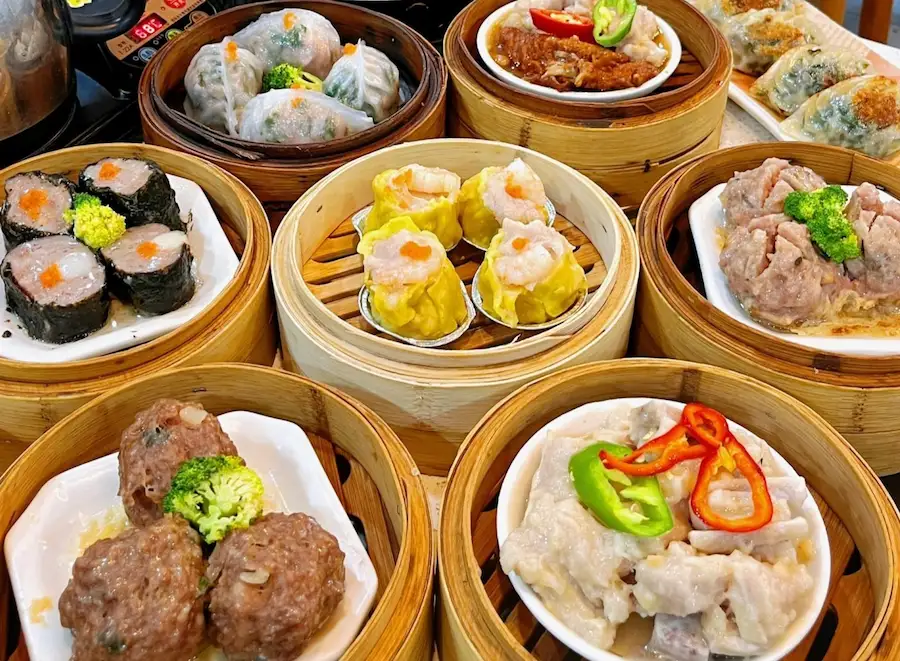
Over a hundred items rotate through the menu, but these four are your mandatory starters:
- Har Gow (虾饺, Steamed Shrimp Dumplings) — Translucent wheat-starch wrappers, whole shrimp inside with bamboo shoots. You can see the pink of the shrimp through the skin. Bouncy, delicate, perfect.
- Siu Mai (烧卖, Pork & Shrimp Dumplings) — Open-topped, packed with ground pork and shrimp, crowned with a dot of crab roe. Meatier than har gow. Dangerous — you’ll eat eight without noticing.
- Chicken Feet (凤爪, Phoenix Claws) — Don’t let the name scare you off. Deep-fried, then steamed until the skin slides off the bone. Black bean sauce, slightly sweet, pure collagen. This is dim sum’s soul.
- Char Siu Bao (叉烧包, BBQ Pork Buns) — Pillowy white buns, torn open to reveal sticky-sweet diced barbecue pork. The Cantonese say yám daahm chàh, sihk go bāau — sip your tea, eat a bun. This is the good life.
⚠️ A small cultural moment: my first dim sum experience in Guangzhou, the server brought a large plastic bowl and a pot of boiling tea before any food arrived. I poured myself a cup and took a sip. My Cantonese friend lunged across the table and stopped me — laughing. In Guangdong, that first pot of tea isn’t for drinking. It’s for rinsing your bowls and chopsticks at the table. A pre-meal ritual. I still remember her face.
Guangzhou nights belong to claypot rice (煲仔饭). At Chaoji near Beijing Road, raw rice and cured meats go into a clay pot together. As it cooks, fat from the lap cheong (Chinese sausage) and cured pork belly drips into the rice. The prize is at the bottom: the faan ziu — the scorched rice crust, golden and crackling, scraped up with a spoon and hit with a pour of sweet soy sauce. ¥25–40 (USD 3.50–5.50). That crust is what you came for.
China Street Food: The Ultimate Cross-Country Guide
China street food is the country’s second menu — the one that doesn’t appear on laminated restaurant pages but often outshines everything that does. If you’re planning a china street food tour across multiple cities, here’s what to hunt down and how to eat safely. Some of the best things to eat in China never see the inside of a restaurant.
The 4-Step Street Food Safety Check
- Watch for turnover. Pick stalls with a line of locals. High turnover means ingredients — meat, seafood, everything — sell out within hours. Nothing sits around at room temperature.
- Insist on high heat. Only eat food that’s being fried, stir-fried, or boiled furiously right in front of you. Thorough high heat kills most bacteria. Skip pre-cooked dishes that have been sitting out.
- Check the water and ice. Don’t drink unsealed beverages or anything with homemade ice from small street stalls. Bottled water and big-brand teas only. Water quality is the single biggest factor in traveler’s diarrhea.
- Scan the stall setup. Are raw and cooked foods handled separately? Disposable utensils? Does the vendor touch money and food with the same hand? If the setup looks questionable, walk on.
Cross-Country Street Food All-Stars
| Street Food | City | Chinese | Price | The Pitch |
|---|---|---|---|---|
| Jianbing | Beijing/Tianjin | 煎饼果子 | ¥8–12 (USD 1–2) | Savory crepe. Egg, crispy cracker, sweet bean paste. Breakfast MVP. |
| Roujiamo | Xi’an | 肉夹馍 | ¥15–20 (USD 2–3) | The Chinese hamburger that puts actual hamburgers to shame. |
| Stinky Tofu | Changsha / nationwide | 臭豆腐 | ¥10–15 (USD 1.50–2) | Smells like a dare. Tastes better than it has any right to. |
| Chuanr (Skewers) | Nationwide | 烤串儿 | ¥3–8 per skewer | Cumin + chili flakes over charcoal. The king of late-night eating. |
| Tanghulu | Beijing / North (winter) | 冰糖葫芦 | ¥10–15 (USD 1.50–2) | Candied hawthorn on a stick. A northern winter street icon. |
| Liangpi | Xi’an | 凉皮 | ¥10–15 (USD 1.50–2) | Cold noodles. Sesame paste. Chili oil. Summer in a bowl. |
The Eight Chinese Regional Cuisines at a Glance
What do people eat in China from one province to the next? The differences are staggering. China officially recognizes eight major culinary traditions, each shaped by local climate, geography, and centuries of history. Here’s your cheat sheet:
| Cuisine | Flavor Profile | Hub City | Starter Dish |
|---|---|---|---|
| Sichuan (川) | Málà — numbing & spicy | Chengdu | Mapo Tofu, Kung Pao Chicken |
| Cantonese (粤) | Light, fresh, sweet | Guangzhou | White Cut Chicken, Steamed Fish |
| Jiangsu (苏) | Balanced, mildly sweet | Nanjing/Yangzhou | Salted Duck, Lion’s Head Meatballs |
| Zhejiang (浙) | Clean, delicate, fresh | Hangzhou | Dongpo Pork, West Lake Vinegar Fish |
| Fujian (闽) | Umami-rich, slightly sweet | Fuzhou | Buddha Jumps Over the Wall |
| Hunan (湘) | Sour & aggressively spicy | Changsha | Chopped Chili Fish Head, Stir-fried Pork |
| Anhui (徽) | Hearty, salty, rustic | Huangshan | Stinky Mandarin Fish, Hairy Tofu |
| Shandong (鲁) | Salty, savory, umami-forward | Jinan/Qingdao | Braised Sea Cucumber with Scallions |
The cities in this guide — Beijing, Xi’an, Chengdu, Chongqing, Shanghai, and Guangzhou — already connect the most essential dots. From north to south, your palate moves through salty to spicy to sweet to fresh. It’s an evolution.
6 Mistakes Foreigners Make Eating in China (Don’t Be That Person)
① The “Old Brand” Near a Tourist Site
Those restaurants around the Forbidden City, Terracotta Warriors, or the Bund with “time-honored brand” signage and staff pulling tourists in from the sidewalk? Ninety-nine percent are tourist traps. Prices doubled. Flavors phoned in. One rule: the farther you walk from a major attraction, the better the food gets. Two streets over, find the place full of local grandpas and grandmas. That’s your spot.
② Ordering Before Checking Prices
Most Chinese restaurants print clear prices. A few seafood spots and scenic-area restaurants list “market price” (时价, shíjià) without a number. Ask before you point. Especially for seafood and seasonal specialties.
③ The Hidden Meat Problem (Vegetarians, Read This)
As Intrepid Travel notes in their guide to eating in China, vegetarian dishes often contain minced meat or animal fat. “Vegetable dish” doesn’t mean vegan. Carry a translated dietary card — something like: “I am vegetarian. No meat, fish, eggs, dairy, scallions, or garlic.” Better yet, seek out dedicated Buddhist vegetarian restaurants (most major cities have them).
④ “Mildly Spicy” Is a Lie
Covered this earlier. Worth repeating. In Sichuan and Chongqing, wēilà translates to “extremely spicy” in most other countries. If you can’t handle heat, learn this: Bú yào fàng làjiāo — “Don’t add chili peppers.” Or just order the yuanyang pot. Preserve your digestive tract.
⑤ Only Eating in Hotels and Malls
Some travelers stick to hotel buffets and shopping-mall chains out of food safety anxiety or language fear. You won’t get sick. You also won’t taste 90% of what makes Chinese food extraordinary. The forty-year-old street-corner noodle shop, the night market stall lit up at midnight, the local joint with zero English and a line out the door — that’s where the real things to eat in China are hiding. If you’re still unsure what to eat in China once you step off the beaten path, remember this: the menu with zero English and a line of locals is almost always the right one.
⑥ The Tipping Fiasco
One TripAdvisor reviewer wrote: “I left a 50 RMB tip on the table in Beijing, and the waiter chased me down two blocks thinking I forgot my change.” There is no tipping culture in China. Leaving money on the table confuses people. High-end restaurants may add a 10% service charge directly to the bill — that’s it. Also worth knowing: the wet napkins and tea on your table at mid-range restaurants may be charged (¥1–5 each). If you don’t want them, tell the server when you sit down. For deeper context on table manners and what’s considered polite, check our Chinese dining etiquette guide.
Quick Answers: Eating in China FAQ
Can I survive as a vegetarian?
Yes, with preparation. If you’re wondering what do people eat in China that’s plant-based, the answer depends on where you are. Big cities have dedicated vegetarian restaurants (search “素食餐厅”). Temple areas often have Buddhist vegetarian halls. In regular restaurants, tofu dishes sometimes come with minced meat — specify clearly. A translated dietary card is your safest bet.
What if I’m traveling solo?
Hotpot and dim sum skew social. Noodle shops, street stalls, and gaifan (rice topped with stir-fried dishes) are built for solo diners. Xi’an’s noodle joints, Guangzhou’s claypot rice spots, Beijing’s zhajiangmian shops — you’ll eat well alone.
How do I order without speaking Chinese?
Three tools: ① Translation apps with photo mode for menus. ② Picture menus — many restaurants have them, or display cases you can point at. ③ This guide. Save the Chinese dish names to your phone and show the server.
Do I tip?
No. China has zero tipping culture. If a high-end restaurant adds a service charge, it’s already on the bill.
Can I drink the tap water?
No. Boiled water is safe — most restaurants serve free hot tea or boiled water. Bottled water costs ¥2–3 (USD 0.30–0.40) at any convenience store. For the local experience: drink tea with your meal — jasmine, tieguanyin, or chrysanthemum.
How much does a meal cost?
Street food / noodle joints: ¥15–35 (USD 2–5) per person. Mid-range restaurants: ¥70–150 (USD 10–21). Fine dining / Michelin: ¥350–1,000+ (USD 50–140+). Most street stalls and small restaurants only take WeChat Pay or Alipay — read our Alipay for foreigners guide before you go.
What’s the best city order for a food-focused trip?
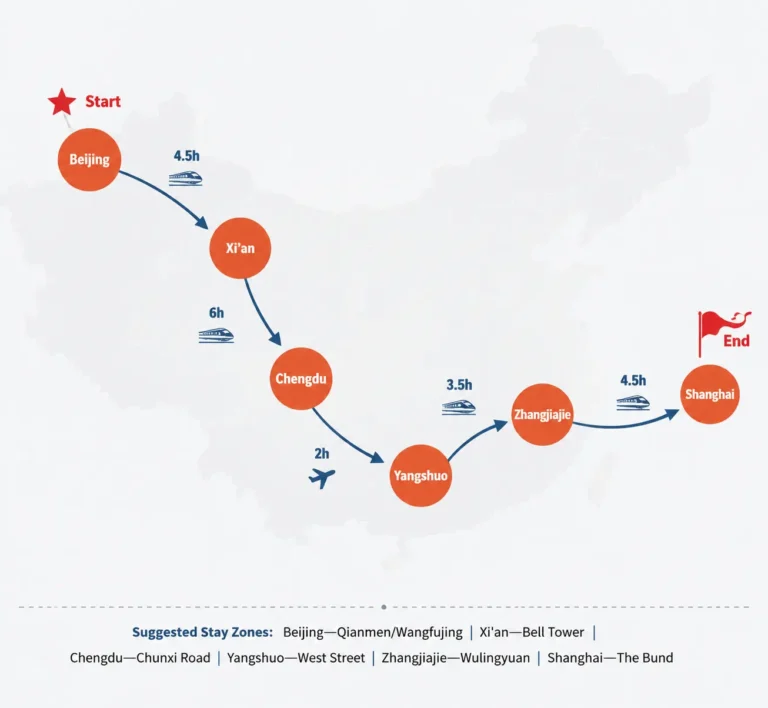
The order in this guide doubles as a suggested route: Beijing → Xi’an → Chengdu → Chongqing → Shanghai → Guangzhou. Beijing to Xi’an is about 4.5 hours by China’s high-speed rail. Chengdu to Chongqing takes just one hour. As your taste buds travel south, the flavors shift from salty to spicy to sweet to fresh. Want to weave these food stops into a structured itinerary? Our 7-day China itinerary gives you the skeleton — plug these meals into it.
When’s the best time to go?
Beijing / Xi’an: autumn and winter (October–March) — hotpot and lamb stew season. Chengdu / Chongqing: spring and autumn (March–May, September–November) — skip the brutal summer humidity. Shanghai: autumn (September–November) for hairy crab. Guangzhou: autumn and winter (October–January) for claypot rice and slow-cooked soups. For a fuller seasonal breakdown, head to our best time to visit China guide.
China’s food scene is overwhelming in the best possible way. The things to eat in China worth traveling for aren’t always the famous ones. Sometimes they’re the china street food stall with no sign and a fifteen-minute queue, where a grandmother has been perfecting one recipe for forty years. The trick isn’t finding good food. It’s everywhere. The trick is knowing what to order when you’re standing in front of it, menu in Chinese, stomach growling.
Now you know. Go eat. And if your first shengjianbao explodes across your shirt — you’re doing it right.

Ke Ping — Founder, InsiderChinaTravel
I personally reply to every email and create free, custom trip frameworks. Already have a plan? I can arrange vetted local guides and private drivers. Over 5,000 travelers from 30+ countries have started their journey this way.
📋 Tell me about your trip ideaReplied within 24 hours. No charge, no obligation.