Alipay for Foreigners — How to Use Alipay in China as a Foreigner (2026)
You step out of a taxi on West Nanjing Road in Shanghai. The driver taps a QR code stuck to his dashboard and says something in Mandarin. You hand him a 100 RMB note. He shakes his head — not refusing payment, just unable to break the bill.
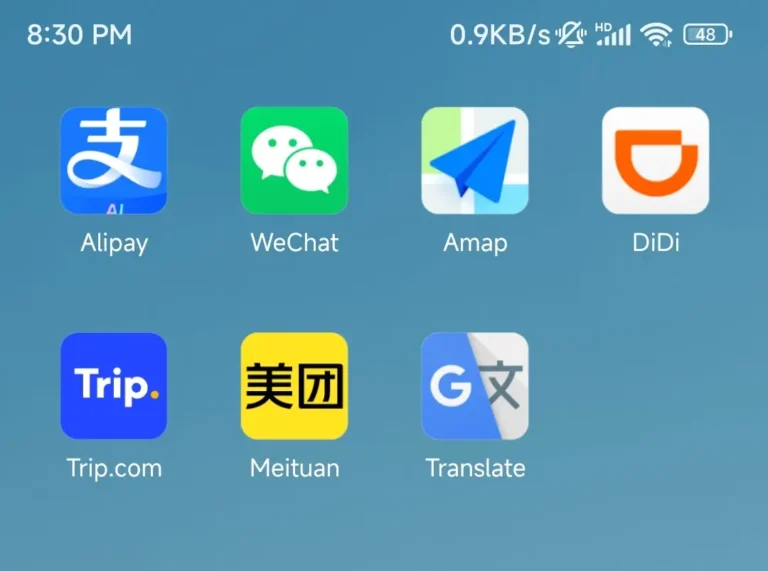
If you’ve been asking yourself how to pay in China without a local bank account, here’s the answer: Alipay for foreigners has become the default gateway to mobile payment in China. The country’s china mobile payment ecosystem now runs almost entirely on QR codes — street food stalls, subway gates, even the guy selling roasted chestnuts from a cart expects you to scan and go. For international visitors, Alipay for foreigners sits at the center of it all, and it’s not WeChat.
Alipay — specifically the international version — is the best china payment app for foreigners right now. Download it, spend ten minutes setting it up with your passport and a Visa or Mastercard, and you’re in. No Chinese bank account, no Chinese phone number, no panic. If you’re planning to travel to China this year, getting Alipay for foreigners sorted before your flight is the one prep step you don’t want to skip.
- Alipay for Foreigners: Why 2026 Is the Easiest Year Yet
- How to Set Up Alipay as a Foreigner: Step-by-Step
- Alipay Foreign Transaction Fees: What You'll Actually Pay
- Alipay vs WeChat Pay: Which One Should Foreigners Pick?
- How to Use Alipay in China as a Foreigner
- Three Things People Forget (Until They're Stuck)
- Quick Answers
- Pre-Flight Checklist
Alipay for Foreigners: Why 2026 Is the Easiest Year Yet
Can you use Alipay as a foreigner? The answer in 2026 is an unqualified yes — and it’s dramatically easier than even two years ago. The Alipay for foreigners experience has been overhauled from the ground up, and the friction points that frustrated travelers in 2024 are mostly gone.
Alipay’s international version (sometimes labeled “Alipay Global”) was purpose-built for overseas users. Three things separate it from the mainland Chinese version: no Chinese ID required, no Chinese bank card required, and no Chinese phone number required. Your passport handles identity verification. Your home country’s Visa or Mastercard handles payment. Your regular mobile number handles registration. This is the foundation that makes Alipay for foreigners genuinely usable — not just on paper, but in practice.
The app now supports 16 languages — English, French, German, Spanish, Japanese, Korean, Thai, Arabic, and more. Payment prompts, error messages, and key menu items are all translated. You won’t be guessing your way through a screen of Chinese characters.
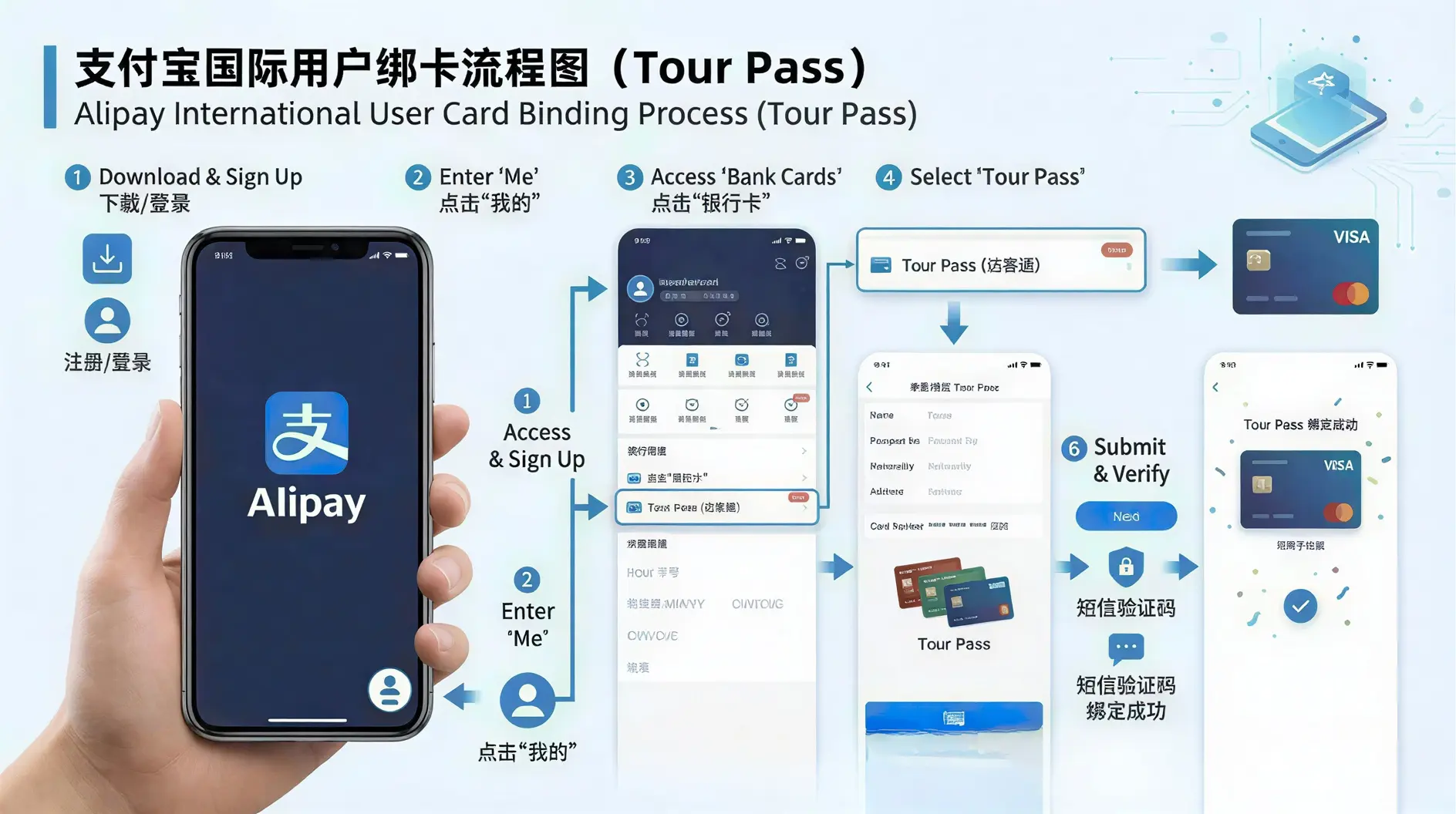
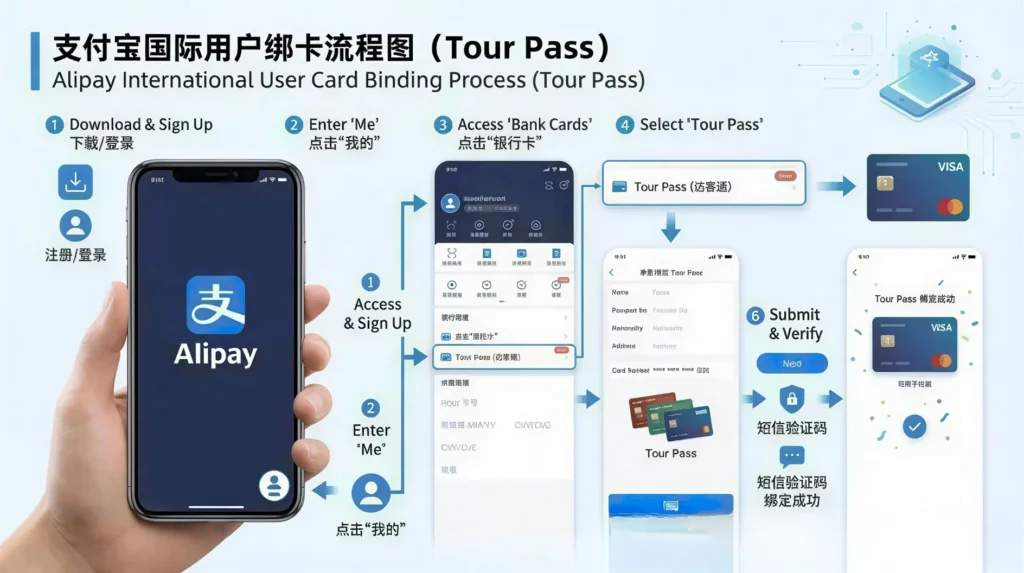
If you’ve stumbled across older guides mentioning something called “TourPass” or “TourCard,” here’s the update: TourPass shut down in March 2023. TourCard stopped accepting new sign-ups on May 29, 2026. Existing TourCard accounts still work for top-ups and spending, but new users can’t activate one. The Alipay for foreigners ecosystem has moved on from these workarounds.
The replacement path is straightforward: link your foreign bank card directly. That’s now the official recommended method. (A newer option worth knowing: in April 2026, Alipay rolled out the Travel Wallet — a no-card-binding, no-fee payment feature for small purchases by inbound travelers. It already supports users from 40 countries. Handy if your home bank keeps blocking Alipay for foreigners transactions — some European and American issuers are finicky about cross-border payments to China.)
How to Set Up Alipay as a Foreigner: Step-by-Step
Time needed: about 10 minutes, plus up to 24 hours for passport verification (usually instant). This walkthrough on how to set up Alipay as a foreigner assumes you’re starting from zero — no prior account, no Chinese contacts, nothing. Before you start, gather these:
- A smartphone — iPhone 7 or newer, or Android 8.0 and above
- Your passport — valid for at least 6 more months
- Your overseas phone number — must be able to receive international SMS
- A Visa or Mastercard — other supported cards: JCB, Discover, Diners Club
- A stable internet connection — Wi-Fi is fine; mobile data works too
Step 1: Download the Right Version
On iOS, open the App Store and search for “Alipay” — not the Chinese characters 支付宝, and not “Alipay HK.” The official app has a blue icon with a white character on it, published by Alipay (Hangzhou) Technology Co., Ltd. On Android, grab it from Google Play or download the APK directly from the Alipay website.
When you first open the app, select “International Version” or choose English as your language. If the app defaults to Chinese: tap “Me” (bottom right) → Settings icon (top right) → “General” → “Language” → pick “English.”
Step 2: Register with Your Phone Number
Tap “Sign Up.” Pick your country code (e.g., +1 for the US, +44 for the UK). Enter your mobile number. Wait for the SMS verification code. Enter it. Set a login password — at least 6 characters, mix of letters and numbers.
Known headache: some overseas carriers (AT&T and Vodafone in particular) block SMS from Chinese services by default. Before you leave home, call your carrier and confirm that “international SMS receiving” is enabled. (Travelers from Peru, parts of South America, and some African countries have reported consistent issues — if that’s you, the safest move is to buy a China eSIM after landing and register with a Chinese number instead.)
Step 3: Verify Your Identity with Your Passport
This is the step that unlocks everything in the Alipay for foreigners setup.
Go to “Me” → Settings (top right) → “Account & Security” → “Identity Verification.” Select “Passport” as your document type. Photograph your passport’s information page — good lighting, all four corners visible, no glare. Complete the face scan (remove glasses and hats, face a light source, follow the on-screen prompts to blink or turn your head).
Approval takes anywhere from a few minutes to 24 hours. You’ll get an in-app notification when it’s done. Do this before your flight. Don’t wait until you’re standing in a Chinese airport without a working payment app.
Face scan kept failing? Try a room with natural daylight, stand against a plain white wall, and hold the phone steady. If your passport photo shows you wearing glasses, try the scan both with and without them.
Step 4: Linking a Foreign Credit Card to Alipay
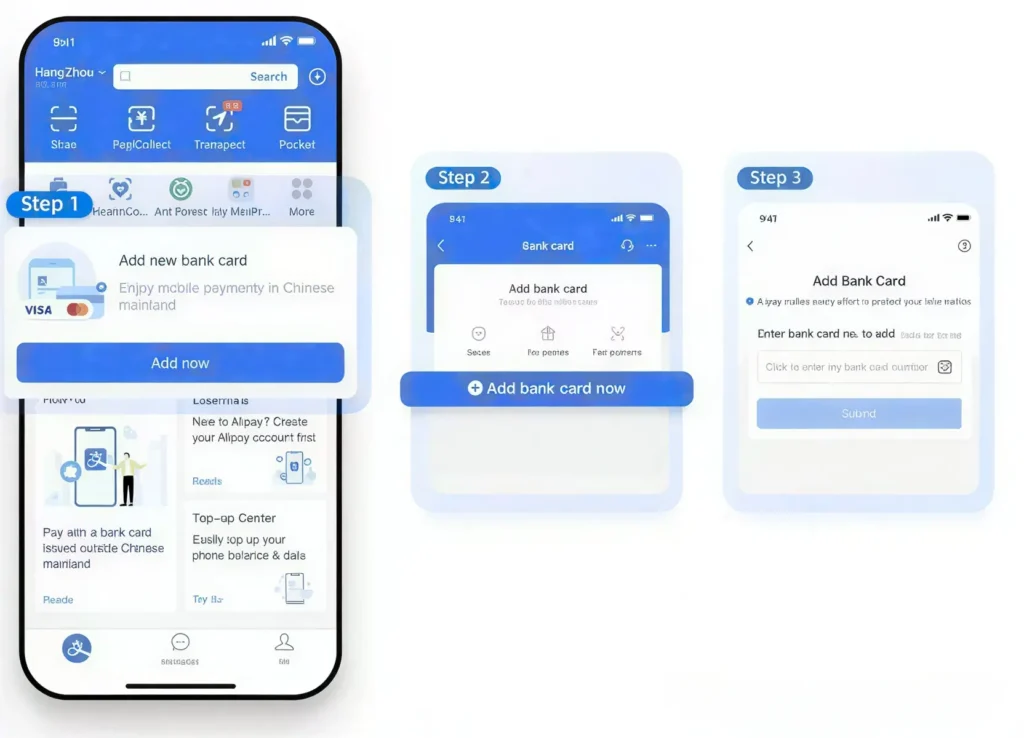
From the home screen, tap “Add Card” or go to “Cards” → “Add a New Card.” Enter your card number, expiry date, CVV, and the cardholder name exactly as it appears on the card. Complete your bank’s 3D Secure verification (usually a one-time code sent via SMS or email). Set a 6-digit payment PIN — this is separate from your login password, and you’ll enter it for every transaction.
Here’s the deal with Alipay foreign credit card support: Visa and Mastercard work nearly flawlessly. JCB, Discover, and Diners Club are all supported. American Express is the odd one out — some users report success, others don’t. If you carry an Amex, save it for WeChat Pay (which explicitly supports it). For Alipay for foreigners, stick with Visa or Mastercard.
Three reasons your Alipay foreign credit card might get rejected:
- Your bank is blocking the transaction as suspicious — call them and authorize international online payments
- Your name doesn’t match your passport exactly — follow the format in your passport’s machine-readable zone
- Your card has insufficient funds for the tiny verification hold some banks run
Step 5: Test Before You Fly
Once your card is linked, search “mobile top-up” inside Alipay and add 1 RMB (about 0.14 USD) to any Chinese phone number. If the payment goes through, you’ve confirmed three things: your card works, your bank won’t interfere, and your payment PIN is set correctly.
Ten minutes. Done.
Alipay Foreign Transaction Fees: What You’ll Actually Pay
Nobody explains this clearly. Here it is.
Alipay charges a 3% service fee on foreign card transactions — but only on purchases over 200 RMB (about 29 USD). Stay under 200 RMB per transaction, and you pay zero platform fees. That threshold covers a lot of daily spending: a bowl of noodles, coffee, a short Didi ride, snacks from a convenience store. Most of your day-to-day purchases slip right under it. (Split a 500 RMB bill into three payments of 200 + 200 + 100 RMB, and two of those three are fee-free. Awkward at a restaurant? Maybe. Worth asking at a hotel front desk or ticket counter? Absolutely.)
Beyond Alipay’s own 3%, there’s another layer many travelers miss: your issuing bank’s foreign currency conversion fee. Alipay processes charges at your card network’s daily exchange rate, and your bank may tack on an extra 1.5% to 2.0%. Check with your bank before departure. If you carry a travel-friendly card like Revolut or Wise, this second fee likely drops to zero.
Transaction limits for passport-verified Alipay for foreigners accounts: up to about 5,000 USD per single transaction (roughly 35,000 RMB), with an annual cap of 50,000 USD. For a tourist, those limits aren’t going to be the bottleneck.
Alipay vs WeChat Pay: Which One Should Foreigners Pick?
Every traveler asks this. The short answer: install both, but lead with Alipay. Here’s why.
| Alipay | WeChat Pay | |
|---|---|---|
| Foreign card friendliness | Excellent | Good, slightly more steps |
| Identity verification | Passport + face scan | Passport + may need a friend to verify |
| Language support | 16 languages in the app | 16 languages for payment prompts; 18 for Mini-Programs |
| Fee under 200 RMB | Free | Free |
| Fee over 200 RMB | 3% | 3% |
| New user bonus | — | First 90 days: fee-free under 1,000 RMB/day |
| Single transaction limit | ~5,000 USD (≈35,000 RMB) | ~6,000 RMB |
| Best for | Daily spending, travel, tax refunds | Social transfers, Mini-Programs (Didi, food delivery) |
| Bank conversion fee | 1.5%–2.0% | 0.3%–3% |
| Extra perk | Travel Wallet (no card needed) | PayPal integration (US users) |
WeChat Pay for foreigners has its own strengths. The Mini-Program ecosystem is the big one: booking a restaurant table, ordering food delivery through Meituan, even buying attraction tickets — the entry point is often a WeChat Mini-Program, not a standalone app. Having only Alipay for foreigners means you occasionally hit a wall where the payment option exists but the service entrance doesn’t. (WeChat also gives new foreign card users a nice perk: fee-free transactions under 1,000 RMB per day for the first 90 days after binding.)
Day to day, pay with Alipay. When a restaurant hands you a QR code that opens a WeChat Mini-Program, switch over. Two apps, zero gaps.
How to Use Alipay in China as a Foreigner
Knowing how to use Alipay in China as a foreigner boils down to understanding two QR code payment methods. Get these right and you won’t freeze at the register.
Method 1: You scan the merchant. Tap “Scan” on the Alipay home screen. Point your camera at the merchant’s QR code — it’s usually printed on a card or sticker at the counter. Enter the amount. Enter your 6-digit PIN. Done. This is how small shops, street vendors, and market stalls operate.
Method 2: The merchant scans you. Tap “Pay/Collect” on the home screen. A dynamic barcode appears. The cashier scans it with their barcode gun. The amount auto-deducts — no PIN needed for small purchases. Supermarkets, chain stores, and convenience stores almost always use this method. (One thing: your payment code refreshes every 60 seconds. Screenshots won’t work. Don’t try.)
Taking the Subway or Bus
Tap “Transport” on the Alipay home screen. Pick your city. Follow the prompts to claim a local transit QR code. Scan it at the metro gate or bus reader when you board. In 13 cities — Beijing, Shanghai, Nanjing, Changsha, Xiamen, Suzhou, Kunming, Qingdao, Shijiazhuang, Tianjin, Xi’an, Dalian, and Jinan — you can also add a transit card directly to Apple Wallet. Tap your phone at the gate. No app, no unlock, nothing. Pure speed.
Rides, Food Delivery, Hotels — and Even Train Tickets
Inside Alipay, search “Didi” for ride-hailing. Search “Ele.me” for food delivery. Search “Hotels” to book a room. These Mini-Programs run inside Alipay — no extra downloads, no separate payment setup. They pull from the card you already linked. If you’re traveling between cities, China high speed rail booking is also accessible through Alipay’s built-in services, and the China bullet train network connects every major destination at speeds over 300 km/h.
Three Things People Forget (Until They’re Stuck)
1. Alipay is useless without internet.
Obvious, but hear this: you land at Pudong Airport. You haven’t swapped in a Chinese SIM yet. The airport Wi-Fi asks for a Chinese phone number to send a verification code to. Your Alipay for foreigners app — fully set up and ready — won’t open without a data connection.
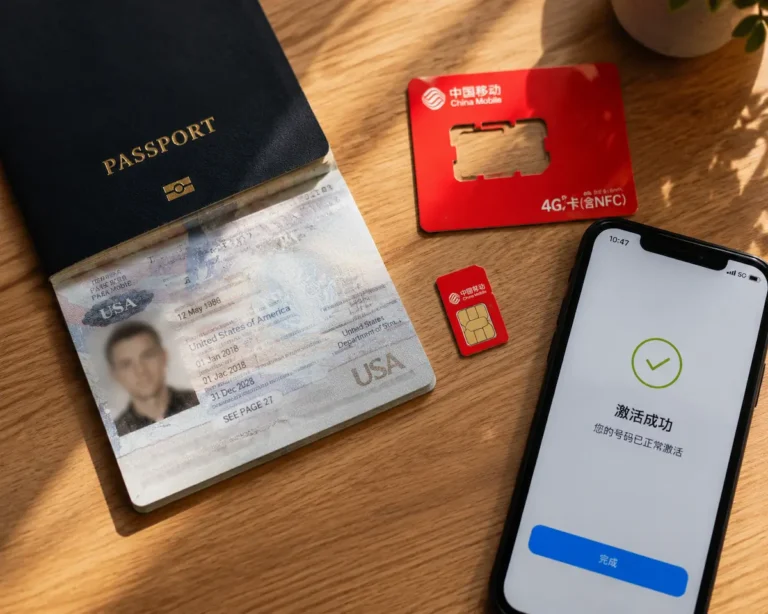
Fix it before you fly. Buy a China eSIM. 2026 prices:
- 1 GB / 7 days: as low as 3.00 USD (SIMOVO)
- 3 GB / 30 days: around 5.56 USD
- 10 GB / 30 days: around 11.73 USD
Reliable providers: CMLink (China Mobile International), SIMOVO, KKday. Confirm two things before buying: the eSIM activates inside mainland China, and it doesn’t require Chinese ID verification.
2. Cash in China hasn’t died. It’s just napping.
Bring some cash in China — maybe 500 RMB (about 71 USD). You’ll almost certainly bring most of it home. (One Reddit traveler put it perfectly: “I brought cash, then brought it all back. Nobody wanted it.”) But for the one elderly vendor who only takes bills, the temple donation box, or the moment your phone battery dies, you’ll be glad it’s there.
By the way: under Chinese law, businesses are required to accept cash. If someone flat-out refuses, you can push back. Just don’t expect them to carry change for a 100 RMB note.
3. The digital yuan hard wallet is a thing.
At major airports and border checkpoints (Shenzhen, Beijing, Shanghai), you’ll find self-service kiosks for the e-CNY “hard wallet.” Feed in your passport. Under three minutes, you get a physical card. Top it up. Tap it at any supported merchant terminal. No phone, no internet, no app. It’s the ultimate backup to your Alipay for foreigners setup.

Quick Answers
Can you get Alipay as a foreigner?
Yes. Download the international version, register with your passport, link a Visa or Mastercard. No Chinese bank account or phone number needed. Alipay for foreigners is built for exactly this.
How does Alipay work for foreigners?
You link a foreign credit card, Alipay processes the payment at your card network’s exchange rate, and the merchant receives RMB. To you, it feels like any other card transaction — just via QR code instead of a swipe.
Alipay vs WeChat Pay — which one?
Both. Alipay for foreigners handles daily purchases (easier setup, better English). WeChat covers Mini-Programs and social payments. Together they cover virtually every payment scenario.
How do I avoid the 3% Alipay foreign transaction fee?
Keep individual transactions at 200 RMB or below (about 29 USD). That threshold covers most everyday spending without a second thought.
What if I never get the verification code?
Call your carrier and unlock international SMS. If that fails, buy a China eSIM after landing and re-register with a Chinese number.
How long does passport verification take?
Minutes to 24 hours. Do it before your trip.
Does Apple Pay or Google Pay work in China?
Almost never. QR code scanning is how 99% of mobile payments happen here. (Transit cards in Apple Wallet are the one exception — see above.)
Pre-Flight Checklist
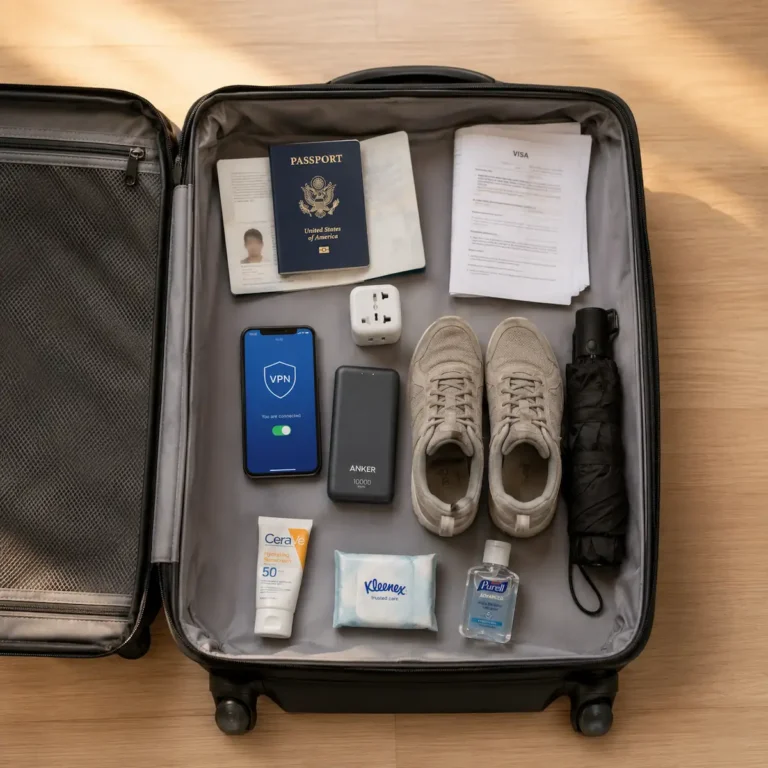
- Download Alipay — International Version, not the Chinese-language app
- Register with your overseas phone number (confirm SMS capability first)
- Verify your passport — clear photo, good lighting, do it before you pack
- Link a Visa or Mastercard (save Amex for WeChat)
- Run a test transaction — 1 RMB phone top-up confirms everything works
- Install WeChat too — bind a card there as backup
- Buy a China eSIM — so you have internet the moment the wheels touch down
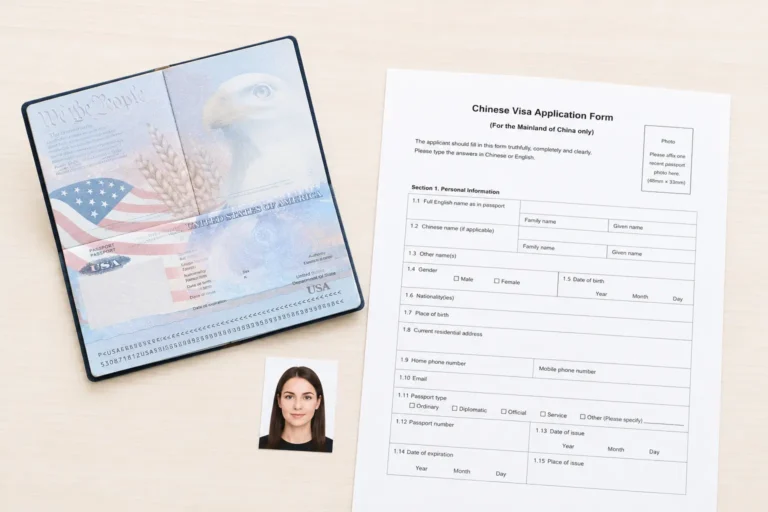
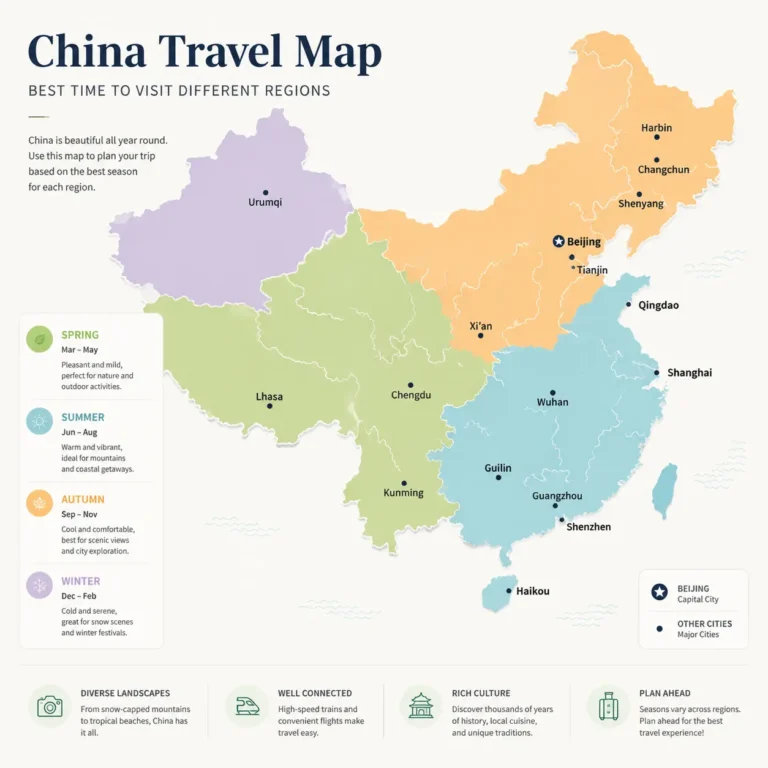
Planning a longer trip? Check the best time to visit China for your itinerary, and make sure you’ve sorted your how to apply for a China visa well ahead of your departure. If you’re still piecing together your route, browse some China tours for inspiration — a well-planned itinerary makes the payment stuff feel invisible.
China is a country where a roasted chestnut vendor in a city of 20 million only takes QR codes — not because he’s trying to be futuristic, but because making change is a hassle he’d rather skip. Cash isn’t gone. But its role has shrunk to a safety net you’ll probably never need to use.
Ten minutes of setup. That’s all that stands between you and a trip where paying for things feels as light as the rest of your journey.

Ke Ping — Founder, InsiderChinaTravel
I personally reply to every email and create free, custom trip frameworks. Already have a plan? I can arrange vetted local guides and private drivers. Over 5,000 travelers from 30+ countries have started their journey this way.
📋 Tell me about your trip ideaReplied within 24 hours. No charge, no obligation.